Meetings in Salinas Huito
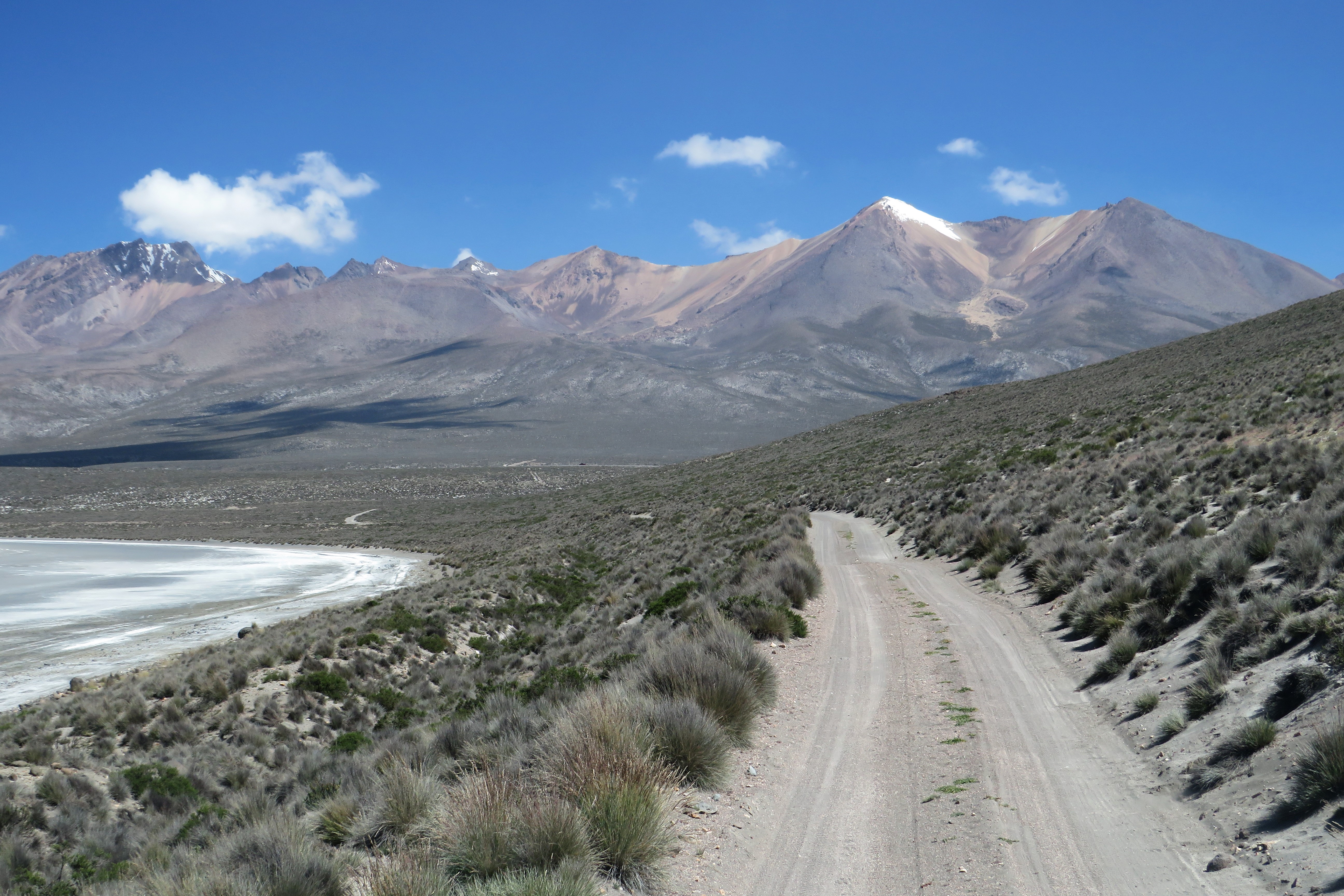
Salinas Huito is a small town on the edge of a high-altitude salt lake, named Laguna de Salinas, or the 'lake of salt'. We have similar kinds of lakes in Australia, which like Laguna de Salinas are dry for most of the year, but when the rains arrive life just teems. Unlike salt lakes in Australia, though, the altitude of Laguna de Salinas is about 4,300 metres, which means oxygen levels are getting down to about 1/2 those of sea level -- so that takes some getting used to. On top of that, the nights are often below zero, even in summer.
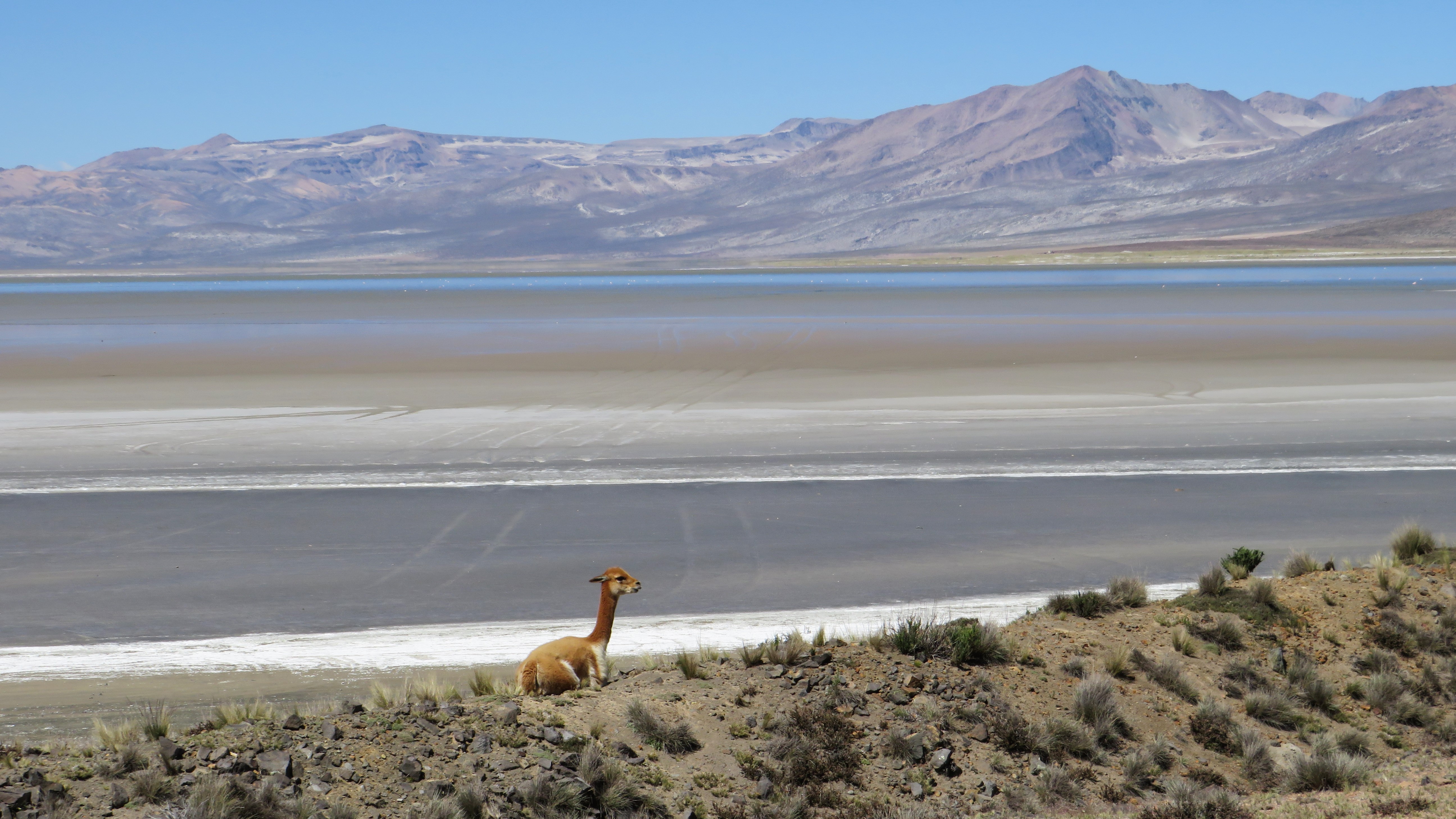
Above: Wary vicuña resting on the lake shore, Laguna de Salinas.
Last weekend (22-23 April, 2023) I drove with Peruvian pastor mate Edgar to Salinas Huito for an ETE (Educación Teológica por Extensión) gathering. Students from Salinas Huito and Salinas Moche (the town on the other side of the lake), as well as a few from further afield, got together to organise their studies for the next semester.

On the Sunday morning I was invited to preach (typically I know nothing of these plans until I turn up; it's all organised in a 'seat of the pants' kind of style). In many ways I would rather hear our Quechua brothers teach from the Scriptures, but (i) they insist, (ii) I need to learn to relate to them, and (iii) I should model what we're trying to teach and get across. So on these occasions I cave in and inflict my basic (but improving) Spanish upon them. It's not like Spanish is their preferred language, anyway (they much prefer to chat with each other in Quechua), but that's our only common language, so Spanish it is.
I spoke from Revelation 7; "That sounds a bit ambitious," you say. But (i) it's a great passage about God's age-old purpose of having a chosen people from every tongue, nation, tribe, people and language (v.9) who declare the glory of the One who has redeemed them, and (ii) it helps our Quechua brothers and sisters see how passages which are normally clouded with hocus-pocus interpretations are, in fact, clear declarations of what it means to live as God's people in a world which stands against them.

"Not many in that church service," I hear you think. You're right; that was because the local authorities had called a community meeting for Sunday morning, and they issue fines to anyone who doesn't attend! While I can't comment for sure on this instance, it has to be said that this is how Christians in these remote communities are often treated; things are often quite deliberately stacked against them.
We've just got through a very good wet season (normally Dec--Mar.) here in Peru, and so there has been plenty of water finding its way into Laguna de Salinas. This, in turn, means there is plenty of wildlife on the water: flamingos, geese, and ducks in abundance.


Above: The green pasture of Laguna de Salinas, with the active volcano Ubinas in the distance. For years it's been throwing up a column of ash and shaking the land with its rumblings, but for the moment it's gone quiet. Who knows how long that will last?
Below: A pair of geese with this year's offspring, heading off to the water before the bloke with the camera got any closer.

With summer and autumn being the wet season here, it's also the warmer weather. Still below zero at night, and plenty of frost on the cars in the morning. When I muttered something about the cold to one of our Quechua sisters, she said, "Hah! You should have been here last July!" Um, no thanks; it was cold enough sleeping fully clothed, with beanie and gloves, and two thick blankets over my sleeping bag.
Below: A peak to the north of the lake, with permanent ice stuck to its sides.

Edgar himself was so glad to be able to come along on the trip. Pastoring a church in Arequipa, but originally from a rural community outside Cusco, he really enjoyed the opportunity to mix again with Quechua believers.
Below: ETE director René (left), Daniel (Presbyterian missionary from Korea, center), and Edgar (right), organising something or other.


Above: Evening light across the lake. For me, it was a strange thing to consider that at the lakeside were were above the clouds, but still had peaks higher than us. In the distance are the peaks known as Picchu Picchu, rising to about 5,600m, with Arequipa over the other side, about 3,300m below. Everything was cold, beautiful, and silent.
Sunday after lunch we wound our way back to Arequipa -- a 3-hour trip which takes you down from 4,300m to 2,300m. It really is a 'vertical' landscape.
We had the usual load of folks to drop off at their farms on the way home, which took us on some less-used tracks around the lake (below). Edgar got home about as tired as I did, but already asking when the next trip might be, and could he come along? Well, of course he can!